Bringing energy-efficient heating to two community and visitor spaces at Verdant Works
Dundee Industrial Heritage Ltd
Go To WebsiteAddressed Challenges:
- Air Pollution
- Health and Wellbeing
- Carbon Emissions
- Greater Fairness / Just Transition
Action Areas:
- Built Environment
- Energy
Initiative Purpose:
- Mitigation and Adaptation
The Story
Dundee, 1833. The age of steam power.
Thousands of Dundonians work in the factories and mills, producing textiles for sale across the country and across the world. It is a time of rich opportunities, but also unprecedented social challenges. And it is the beginning of a dangerous increase in carbon emissions, which today threatens all life on our planet...
Dundee, modern day. The age of climate change.
A new industrial revolution is afoot. Green technology is changing the way we live and work, and has the potential to make life better and fairer for everyone. But how can we harness it? And how can we make sure no-one gets left behind?
We are Dundee Heritage Trust, proud guardian of two of Dundee’s best-loved museums.
Verdant Works Museum is our restored Victorian mill, telling the story of Dundee’s jute industry and its people. Run by a lively team of staff and volunteers, we care for a nationally significant collection, including an original steam engine and large-scale replicas of the machines used by Dundee mill-workers for over a hundred years.
Our machines all run on electricity today, meaning we don’t have to burn fuel to demonstrate to our learners and visitors how these magnificent machines worked in the past. But because so much of our building is old, we are still powered in many places by gas: a fossil fuel which, when burned, releases carbon dioxide and other harmful gases into the atmosphere – and makes it expensive and difficult to heat the spaces in winter.
Thanks to the kind support of the Dundee Climate Fund and our enthusiastic volunteers, visitors, local schoolteachers, and community partners, we were incredibly excited to able to address this challenge for the very first time.
Success & Outcomes
By replacing the gas heating in our machine hall with a low-carbon electric solution, we are now incredibly proud to have cut the use of gas in this space to zero and improving the conditions for volunteers and visitors.
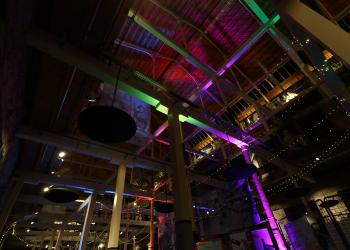
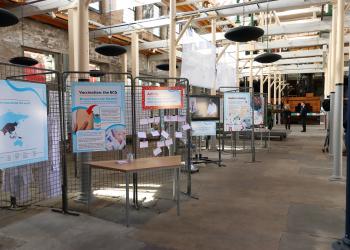
And, since installing the same system in our beautiful but sadly underused High Mill, we have been proud to host our first winter exhibitions for many years, trialling new sustainable approaches to reduce waste and transport emissions in their design, print, and display, and engaging our community with inspiring public health science in Dundee.
In the first winter since the heating was installed, we are also very proud to have welcomed 724 schoolchildren and community learners on learning visits, supporting education around the industrial revolution, its social and environmental impacts, and how people played a role in transforming Dundee, an increase of 229 compared to the same period in the previous year.
We have also been increasingly engaging with local community groups including ScrapAntics New Scots Family Club supporting refugees living in Dundee to enjoy their local museums as well as providing tailored visits for the Dundee International Women’s Centre, as our learning team is now able to plan and schedule visits more comfortably at any time of year.
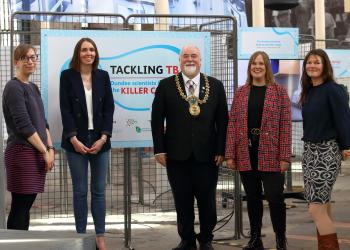
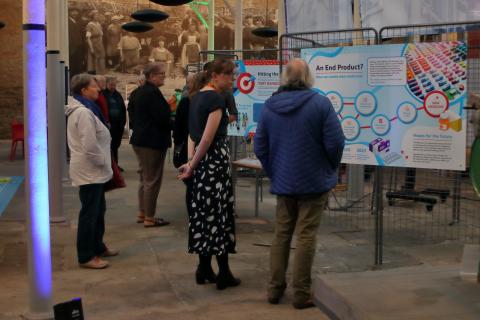
Another outcome of the project was that we have been able to host our first winter temporary exhibition at Verdant Works in partnership with and supported by scientists at the University of Dundee School of Life Sciences and the Wellcome Trust. The exhibition, Tackling TB: Dundee scientists fighting the killer cough, reached several thousand visitors and engaged children and young people in STEM, social history, and public health topics at the mill, including how air pollution contributed to an unhealthy environment in Dundee in the industrial age.
Since the project, we have also been able to host more community events including:
- Our Christmas Fayre with local crafters, makers, and community stalls
- Our first public Disruption Night for local people to have their say on the museum
- Weemin in Science community event with the University of Dundee scientists
- Life drawing classes with a Victorian theme with an independent local artist
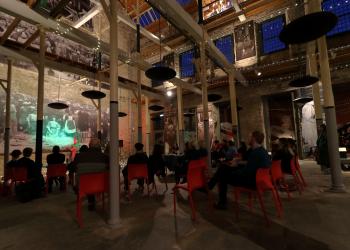
- Various musical events, performances, and concerts for local people
Advice for others looking to do something similar
For groups with responsibility for a listed building:
We cannot recommend enough the resources on the Historic Environment Scotland website as a starting point for advice on energy efficiency, insulation, renewables, and heating your building. You might be surprised by just how many options there are.
Getting a second opinion from an architect and engineer was also immeasurably helpful for us to be sure that infrared heating would be a good option for our space that would be less costly and carbon-intensive than traditional gas or space heating.
For working with your community:
It is always tempting when a new fund appears to imagine all of the wild and wonderful projects you could come up with! But right from the beginning, our team were very passionate (and very strict!) about our crafting a bid to help us not just reducing our environmental impact, but take better care of our existing and developing community relationships.
The idea was that by using our existing skillsets of education, visitor, and community engagement and working with groups we are experienced in working with at the museums, we could achieve the greatest impact – and we’re so glad we did.
We are incredibly fortunate to have a brilliant bunch of volunteers as well as enthusiastic local teachers, artists, crafters, and makers who know and love the museum, and who understand both its benefit and its challenges first-hand. Verdant Works is also privileged to welcome around 14,000 visitors a year, including hundreds of school children and community groups on learning visits.
Working closely with these groups to design our project meant we could put something forward that could have a really long-lasting impact on the work of the museum – enabling us to engage the community all year round and cut our reliance on expensive and polluting gas heating to improve our environmental, financial, and social sustainability for the long term.
For supporting people to participate on their terms:
To access the Dundee Climate Fund, MyGovScotland was slightly challenging for some of our supporters to navigate, with many asking for assistance to vote. This was challenging, but we can only advise that if others have a similar experience in future, be respectful of your supporters in the process. Make sure you leave enough time and space for anyone asking support to access the vote to absorb the instructions at their own pace and to browse the different projects independently. It was important to us that the chance to vote in the fund wasn’t just one charity or project, but each person’s ability to have a say in the climate solutions they wanted for their community.
For talking about the fund and the project:
When talking about the project with people who weren’t familiar with carbon jargon or public policy, we found it was best to use simple language. Why talk about a ‘just transition to net-zero’ when you can talk about avoiding harmful gas emissions equivalent to X number of flights, or the schoolchildren who could visit if we can keep our spaces warm and waste less money on old-fashioned heating? This was essential to help people understand the project at the voting stage, but equally useful learning in general to help us talk about a solution to the climate crisis in way that is genuinely helpful and empowering for most people.