
Growing Chrysalis Initiative was based on transforming a disused bowling green into a multipurpose community space, directed and driven by local need.
Scottish Action for Mental Health
Go To WebsiteAddressed Challenges:
- Health and Wellbeing
- Food Security and Supply
- Biodiversity loss
- Greater Fairness / Just Transition
Action Areas:
- Biodiversity and Nature
- Finance
- Built Environment
Initiative Purpose:
- Mitigation and Adaptation
The Story
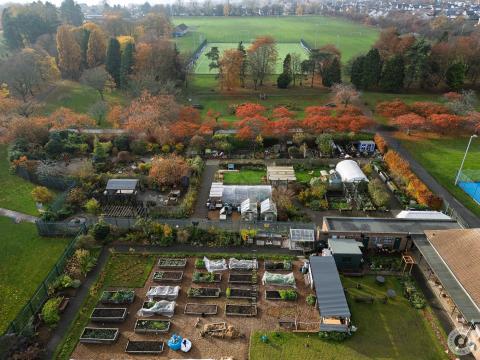
This project was about bringing people together, encouraging people to form new and stronger connections, building community capacity and resilience. The space set out to create many opportunities for individuals to develop and share skills, to volunteer and to influence and improve this amazing greenspace. SAMH also delivered targeted sessions with schools, nurseries, colleges, families, intergenerational and disability groups.
Before starting the project, we consulted local residents and groups, park users, people with mental health issues, other horticulture services, schools, NHS services and local community officers/team and have been directed at every stage of the development by these ongoing consultations and driven by the volunteers involved.
We have been directly working with local schools, colleges, families and numbers are growing month by month. Many other organisations have also been encouraged to use the space for their own activities and carer groups, nurseries, walking and yoga groups have all being using the space regularly with many contributing to the development too. In the last year we have had 3910 individual recorded visits to the garden and volunteers have contributed 3524 hours work to developing the space.
We have provided a huge amount of organic food accessible to local people whatever their financial circumstances are. The skills shared and learned by everyone involved in the project has led to increasing climate friendly food growing opportunities.
The new composting area has allowed us to adopt better no dig methods, prevented food waste going to landfill while feeding our soil and teaching others how to do this at home.
We have had a few opportunities to gather and share food within the groups. This has been great to encourage people to socialise more and often discussions which take place include ways to prevent climate change, how much tastier home-grown food is, sharing of recipes and hints and tips. This also gives the opportunity to demonstrate healthy climate-friendly habits that are accessible. Sharing a table, preparing food together and eating with fresh ingredients will be something that we will be building on going in the future.
Success & Outcomes
We have been able to collect our autumn and winter rainwater and store it for the drier Spring and Summer months, reducing reliance on tap water. Also, we have had an increase in volunteer numbers and have received positive comments and feedback from visitors. Visitor's 'daily veg cards' are being topped up regularly so that folk in the area can help themselves. Additionally we have observed an increase in wildlife populations including butterflies, bees, frogs and we even have a squirrel who keeps an eye on what we're up to! These are just to name a few successful outcomes from the project.
Advice for others looking to do something similar
We wish we made our composting area bigger and the watering system was a challenge - but we worked it out in the end! We would recommend REHIS training for anyone cooking outdoors and remember to have multiple sheltered areas for seating! Keep coming up with creative ways to engage more people; physical and less physically demanding jobs on offer all the time. Lastly, work in partnership whenever possible.