About the Toolkit
This toolkit is designed to help small and medium-sized enterprises (SMEs) and other non-domestic public and private building owners to start their journey toward decarbonising their buildings.
Building upon Sustainable Dundee resources; the toolkit will focus on practical advice providing support for SMEs, charities and public building owners - providing support where needed in a potential new field.
Dundee’s Local Heat and Energy Efficiency Strategy (LHEES) identifies the need to support this sector in decarbonising local buildings in Dundee; providing base level knowledge, 'first steps' toward heat decarbonisation, funding and support opportunities and further case studies.
What is Net Zero?
Dundee has a mission to tackle the Climate Emergency by supporting low carbon living, and a target of reaching Net Zero Greenhouse Gas emissions before 2045.
Sustainable Dundee is helping to push this goal, but Scotland won’t be able to reach it without businesses taking action.
Being Net Zero means that you are emitting no more greenhouse gases than the amount you are using.
Carbon Footprint
Carbon footprint refers to the measurement of environmental impact that a business or person have. For SMEs, carbon footprint is increasingly being used as a metric of sustainability for businesses to reduce their climate impacts.
There are many simple energy-saving measures a company can make even before knowing its carbon footprint. These are two useful guides that can allow SMEs to take small strides toward this journey:
However, by simply measuring a carbon footprint and developing a deeper understanding, SMEs can better understand how to reduce their impact. A simplified guide for SMEs can be found here:
Government Guidance
SMEs are increasingly expected to meet sustainable requirements alongside larger corporations. In the UK, SMEs emit on average 15 tonnes of CO₂ annually. '
With Dundee’s LHEES (Local Heat and Energy Efficiency Strategy), every SME within Dundee has a role to play. Dundee is a leader in the field – and every business has a part to play.
There is no regulatory requirement to publish your greenhouse gas emissions as an SME – however many will publicly disclose this via advertisement materials in an effort to show they are trying.
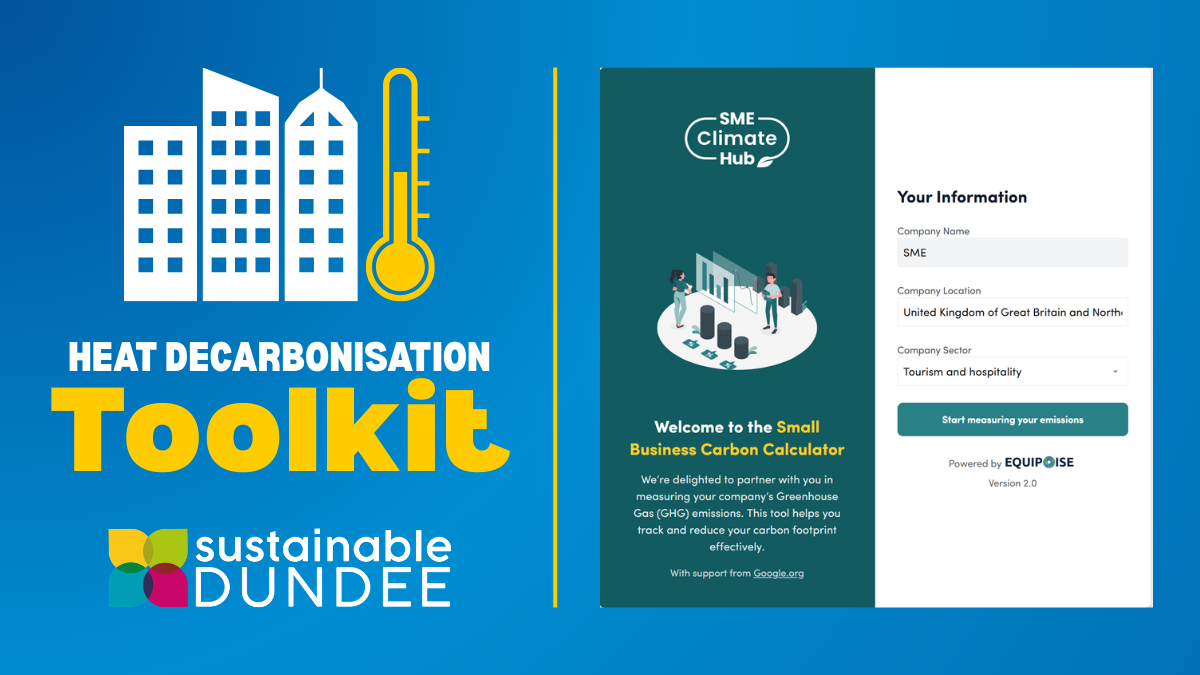
Carbon Footprint Calculator
Through this free tool, your organisations emissions can be calculated – for SMEs.
This tool will calculate your Carbon Footprint and start you on a journey toward reducing carbon emissions:
Getting Started
A good starting point is the SME guide to Energy Efficiency. This guide outlines actions that businesses can take to increase energy efficiency and reduce carbon emissions.
Outlined in the guide, it states that ‘the average SME could reduce its energy bill by 18-25% by installing energy efficiency measures’. And that ‘heating costs increase by around 8% for every 1°C increase’.
Evidenced is that small changes can: Reduce energy and heating costs significantly and positively impact an SMEs carbon footprint. These are small changes but the greater the change, the greater the impact and the guide outlines larger steps that can be taken.
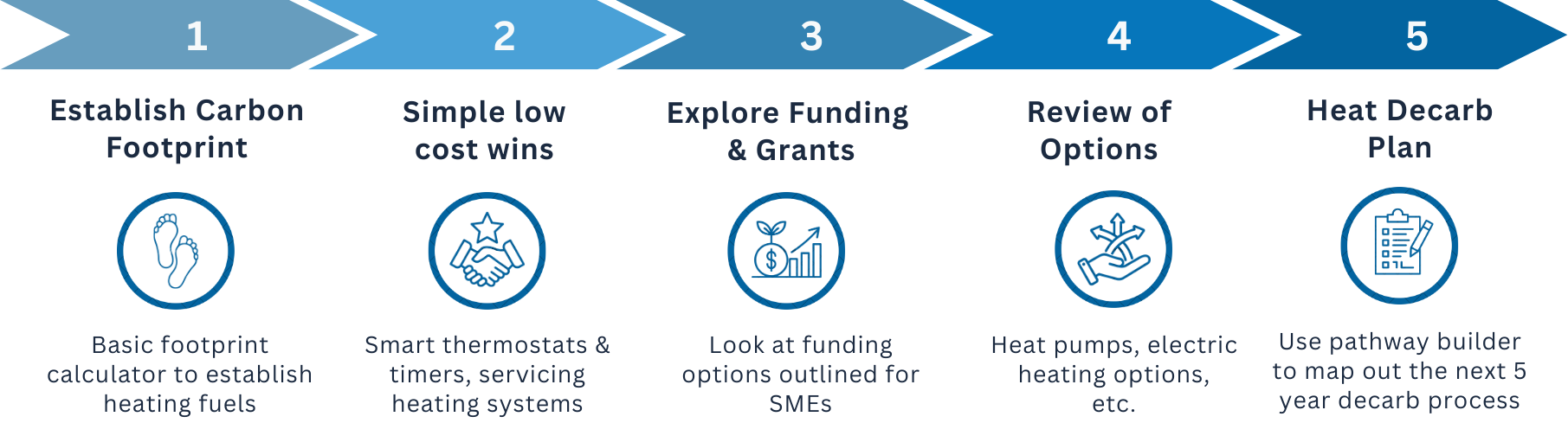
Why Take Part?
For some SMEs, this area is completely unchartered. There are small, doable actions that can easily be tackled.
These are immediate cost savings through early actions for SMEs and through low-cost, high impact measures; SMEs can start reducing their emissions immediately.
SMEs can see benefits such as:
- Reduced bills
- Cost savings
- Improved brand image
- Contributing to Dundee’s net zero mission
Funding & Support
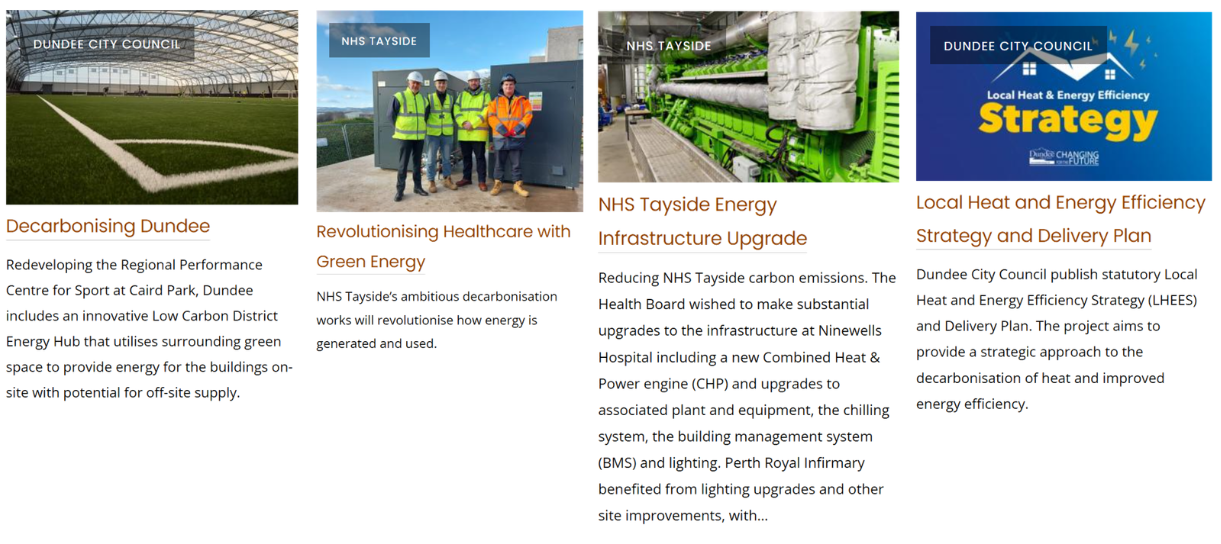
Further Case Studies
There are many interesting case studies that show processes of decarbonisation that have been successfully tackled by local Dundee businesses. All of these studies have links to carbon footprints, decarbonisation or heat and energy efficiency.